Zdobienie

The Horsehead Nebula Complex: Barnard 33, IC 434, and the Flame Nebula (NGC 2024) – An Astrophysical Analysis

Zdobienie

The Horsehead Nebula Complex: Barnard 33, IC 434, and the Flame Nebula (NGC 2024) – An Astrophysical Analysis

The Laboratory of Gravity and Radiation

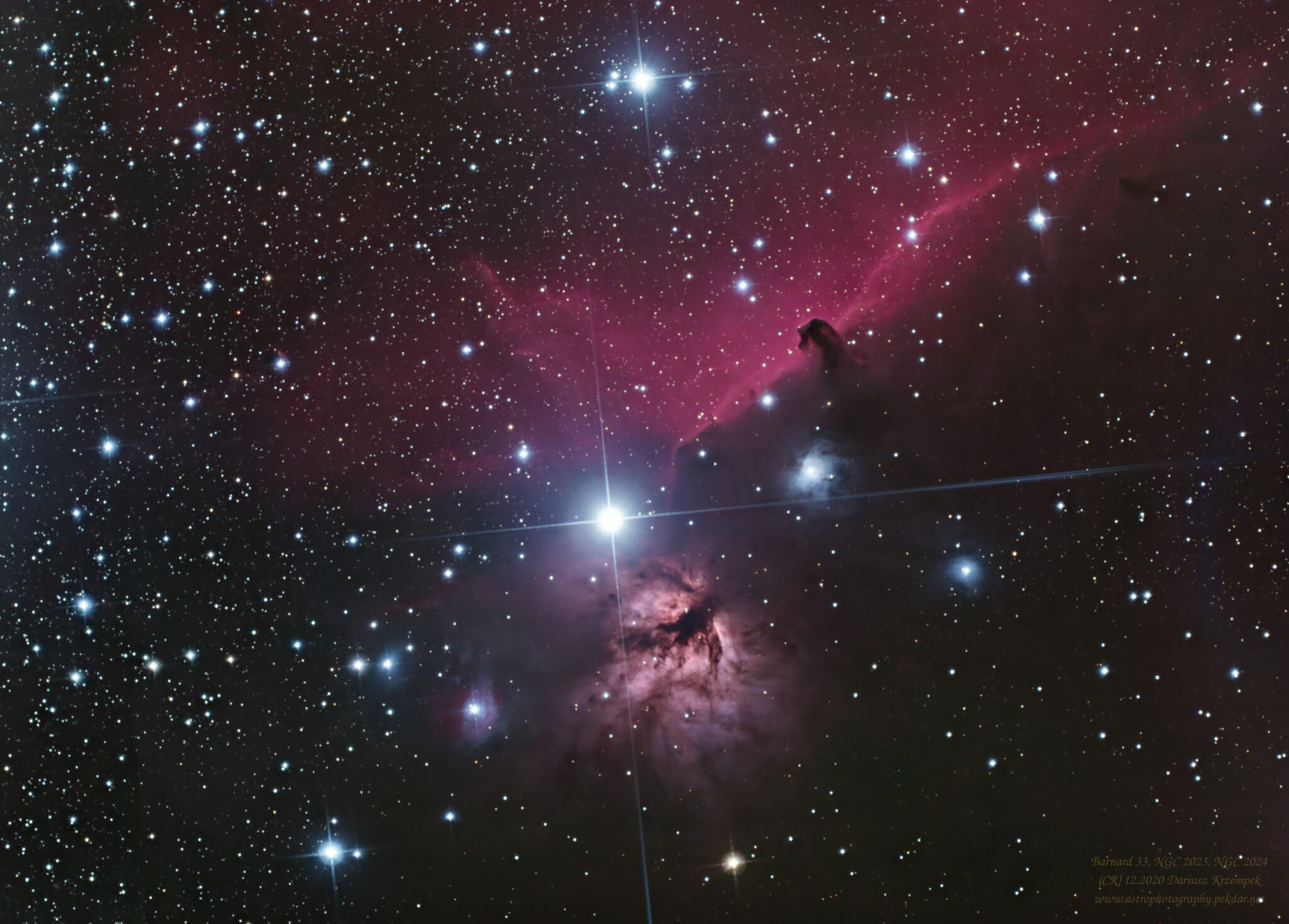
The Horsehead Nebula Complex, located within the constellation of Orion, is one of the most important and instructive regions in our Galaxy. Situated at a distance of approximately 1500 light-years from Earth, it serves as the closest active star-forming zone to us, providing a textbook laboratory for interstellar physics.

This image focuses on the dynamic interaction of three fundamental types of cosmic matter that coexist within a single frame:

  1. Emission Nebulae (IC 434, NGC 2024), which emit light due to hydrogen ionization.

  2. Dark Nebulae (Barnard 33), which absorb light, forming dense, cold cocoons.

  3. Reflection Nebulae (NGC 2023), which merely reflect and scatter light from a nearby star.

The primary engine and sculptor of this region is ultraviolet (UV) radiation, emitted by massive, short-lived stars such as Alnitak ( Orionis) and Sigma Orionis. Their energy creates powerful stellar winds and generates shockwaves that, over millions of years, erode and compress the parent clouds of gas and dust. Consequently, this image is a visual record of the ongoing cycle of cosmic destruction and creation.


Three Nebula Types in One Frame

The Orion Complex serves as a laboratory showcase, demonstrating how the powerful ultraviolet (UV) radiation from nearby massive stars—such as Sigma Orionis and Alnitak—affects the structure and luminosity of the interstellar medium. In this single frame, we witness textbook examples of three fundamental mechanisms of light-matter interaction.

The Emission Background: IC 434 (Hydrogen Ionization)

The bright, red background dominating the frame is IC 434—a gigantic cloud of hydrogen. This is a classic emission nebula (H II region), which does not reflect light but rather emits its own light through the process of electron recombination.

  • Mechanism: High-energy UV light, originating from the distant but incredibly powerful star Sigma Orionis, strips electrons from hydrogen atoms. When these electrons “recombine” (drop back to lower energy levels), they emit a photon.

  • Color/Signature: This process is responsible for the characteristic deep red glow seen in images, dominated by the H-alpha line ().

  • Crucial Role: IC 434 acts as the “projection screen” for the Horsehead Nebula (Barnard 33). Without this emission background, the dark silhouette of B33 would be invisible.

B33 / NGC2023 / NGC2024 / ASAS 053739-0146.3


Barnard 33 (Dust Erosion)

The distinctive black silhouette shaped like a chess piece is Barnard 33. This is a dark nebula—one of the most famous molecular clouds in the Milky Way.

  • Mechanism: Barnard 33 is not a lack of matter, but an extremely dense, cold molecular cloud of dust and gas that is too thick to let light from IC 434 pass through. The cloud actively absorbs light from behind it, creating the high-contrast silhouette.

  • Shape and Erosion: The specific “horsehead” shape is the result of photoevaporation. The intense UV radiation from IC 434 (which ionizes hydrogen) simultaneously destroys and evaporates the outer layer of B33.

  • Future: Barnard 33 is a remnant: its density allows for star formation within its core, but it is being gradually “eaten away” by the radiation of its stellar neighbors.

B33 (full frame)


The Flame Nebula (NGC 2024)

Dominates the right side of the frame. Similar to IC 434, it is an emission region, but its dynamics are more violent due to the proximity of its energy source.

  • Power Source: It is ionized by the nearby star Alnitak ( Orionis), the easternmost star of Orion’s Belt, though Alnitak itself is not located in the nebula’s core.

  • Structure: The UV light from Alnitak is so intense that the nebula appears to be “burning” toward the star. The characteristic dark filaments are dense dust positioned in front of the brighter emission gas.

  • Star Formation: Behind these dark filaments in the Flame Nebula, astronomers have detected numerous protostars—the Flame is one of the most active and closest star-forming regions to us.

NGC 2024 (full frame)


The Reflection Nebula (NGC 2023)

The small, blue glow at the base of the Horsehead is NGC 2023. It is one of the brightest examples of a reflection nebula.

  • Mechanism: Unlike IC 434 (which emits its own light), NGC 2023 merely reflects the light from a star located within its core (HD 37903).

  • Color/Physics: It glows blue because the process is the same one that gives the Earth’s sky its blue color—Rayleigh Scattering. Short wavelengths (blue) are scattered much more effectively by fine dust grains than long wavelengths (red).

  • Conclusion: This object completes the complex, demonstrating all three states of matter-radiation interaction: emission, absorption, and reflection.

NGC 2023 (full frame)


ASAS 053739-0146.3 (USNOA2 0825-01610019) – Variable star

Spectral type: M9 (Red dwarf, coolest)

Surface temperature in the range: 2,400–3,700 K

IR – Infrared wave source

Mag: 15.35

Stars M class are most common. About 76% of the main sequence stars in the spectral band of the Sun (class G) are class M stars (red dwarfs), their brightness is so low, that it is impossible to see them with the naked eye, except under exceptional conditions.

The brightest known M class main sequence star is M0V Lacaille 8760, with magnitude 6.7 (the limiting magnitude for typical naked-eye visibility under good conditions is typically quoted as 6.5). So, it’s very unlikely that any brighter example of a class M star, will occurs anytime soon. But we can’t this completely ruled out.

As you can see in the example photo, with a telescope with a focal length of 420 [mm], brightness F2.8 and a sensitive RGB camera, by exposing a selected area of the sky long enough, you can register stars of the spectral type M (coolest red dwarfs) with very low brightness (15.35 mag) with a very clear presence in the entire frame.

It’s worth noting that red dwarfs burn out very slowly, which means they can be very, very old compared to other types of stars.

ASAS 053739-0146.3 / USNOA2 0825-01610019 (full frame)


Technical information

  • Date: 12.2020
  • Composition: APP
  • Processing: APP, RawTherapee, GIMP + add-ons (Linux),
  • Lights: 170 x 60[s] (2h 50min.),
  • Calibration frames: Flats, Bias, Darks.


Own study based on sources:

https://en.wikipedia.org/wiki/Stellar_classification

https://en.wikipedia.org/wiki/Stellar_classification#Class_M

https://astrobackyard.com/types-of-stars/#:~:text=%20The%207%20Main%20Spectral%20Types%20of%20Stars%3A,Arcturus%29%207%20M%20%28Red%29%20%28%20Betelgeuse%29%20More%20

https://en.wikipedia.org/wiki/Flame_Nebula

https://en.wikipedia.org/wiki/NGC_2023

https://en.wikipedia.org/wiki/Horsehead_Nebula

Support my work on Ko-fi

Did this guide help you?

I create these guides and projects as a hobby. If I helped you save time or money, consider supporting my work with a coffee. It keeps the energy flowing for future projects.

Categories
Newest articles
Support

Was description useful? Consider to support author, it prevents to post annoying ads for you. All you just could do is once a year, sponsor for me a coffee. The currency, amount, doesn’t matter to me. Matter to me, that you want!

Read

Similar Articles

SynScan - PCB - pads

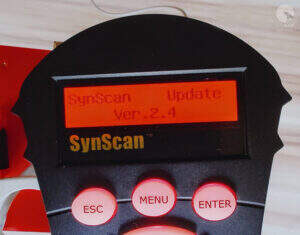
SynScan GOTO controller – trouble with buttons

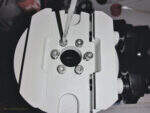
Even though this article has been around for ages, it still offers valuable insights and practical support for users of the SkyWatcher NEQ6Pro mounts. The content has been refreshed and tailored to match the current website engine, making sure everything looks and runs as smoothly as possible.     At some point while using the controller, I noticed that the ESC button wasn’t always working. I lived with it, but after a while, the left Ra button also started acting up and wouldn’t always connect. A red flag went up in my head – something needed to be done. It’s worth noting that the problems appeared right after the warranty period ended… coincidence? There weren’t many options, just two: either send the controller for service and pay a considerable amount for the repair, or try to fix it myself. My tinkering nature took over (as always), and I set about solving the problem on my own. I assumed that some dirt or substance must have gotten inside, which over time became sticky and was gripping the button. I don’t recall spilling any liquid on the controller, but I also can’t rule out a situation where rain or high humidity (fog) penetrated the controller’s interior. My recent, not-so-great experiences with electronics, especially those manufactured in China, gave me an idea of what I might find inside, so I prepared a few things for the job. Contact spray – quite a nice product for cleaning and degreasing electronics and optical devices, including removing contaminants from glass without damaging optical coatings.Cotton swabs are a must-have. Plastik 70 spray – in my electronics work, I usually reach for Plastik 70 spray (clear lacquer). It creates a thin, transparent, and, most importantly, sealed coating. It excellently protects soldering points from the tin components oxidizing and forming ‘cold solder’ joints, which stop conducting electricity relatively quickly after service work.A small, so-called artistic brush will be necessary to precisely and evenly spread the Plastik 70 over the repaired surfaces. Let’s get to work. We’re unscrewing the controller; it’s held together by 4 Phillips head screws. There are no clips, so slowly and gently, but without excessive force, we remove the housing. On the left side, carefully disconnect the white ribbon cable (signal) with the white plug and the plug with the colored wires (power). Grab the PCB board from the left side and slowly, gently turn it over to the right side. Contamination is visible at the soldering points of the white ribbon cable. Below, you can see dirty pads for the ESC button. Now I know where the problem with the uneven operation came from; it would connect sometimes and sometimes it wouldn’t – irritating. It’s not that visible in the photo, but the direction button pads weren’t exactly clean either. It was quite noticeable under the light. The opposite end of the controller, was also dirty. The soldering points of the disconnected plugs. The button pads were also dirty. I’m at my wit’s end. There’s no choice, the entire PCB will have to be cleaned. How to clean without breaking anything? Spray a little of the substance into the removed cap from the contact cleaner and dip a cotton swab in it. Lightly wipe out the dirty areas. Repeat the process until all the dirt is removed. Once you’ve cleaned all the areas, you need to protect the soldering points. Plastik 70 and a brush will be used for this purpose. The procedure is very similar to cleaning. Spray a little of the substance into the removed cap. Use the brush to apply the Plastik 70 to the soldering points. Wait 10 minutes for the applied Plastik 70 to dry.” View of the controller after cleaning the soldering points of the electronics, pads, and applying a protective plastic coating to the soldering points: I think it turned out quite decently. In my assessment, that’s everything. All that’s left is to reassemble the controller and test its operation. The problems that occurred earlier have disappeared.    

Read more...
EQDIRect for NEQ and EQ mounts

EQDIRect for NEQ and EQ mounts

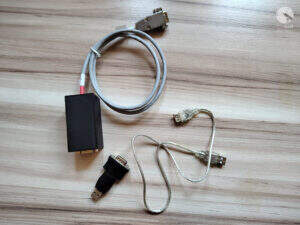
    The GOTO controller is extremely convenient and practical to use, when you want to look at interesting night sky objects, with your own eye through the eyepiece mounted in the telescope’s focuser. The ability to quickly select an object using the GOTO controller, is invaluable. It’s way better using mount with PC and Here it comes the EQDIRect for NEQ and EQ mounts.     In astrophotography, however, the GOTO controller isn’t necessarily as convenient. I admit there were times when it actually got in my way. I decided to remove the controller so it would no longer intermediate the mount control; its role has been taken over by Astroberry combined with an EQDirect solution. My own implementation is based on descriptions for EQDirect available on the Internet. EQDIRect self made    The topic seemed simple, however, when it came to actually building the device myself, things weren’t so obvious anymore. Some important information is missing online. It’s easy to make a mistake that could seriously damage the mount’s electronics, as well as the Astroberry or another computer to which the EQDirect is connected. Repairing these devices can be very expensive! Once I had gathered all the necessary pieces of the “puzzle”, analyzed and double-checked the subject several times, I assembled the whole thing. Then, with a slightly trembling hand, I switched on the power to the mount. EQDIRect home made – set Luckily, nothing exploded 😉 What’s more, everything works – and it works like a charm! The mount responds to and executes all commands issued to it by the KStars+EKOS duo, along with the EQMod with INDI driver, and all of this resides together in Astroberry. EQDIRect for NEQ and EQ mounts – Astroberry configuration EQDIRect – EKOS – EQMod mount driver with setup Of course, EQDIRect will also work with ASCOM and other software that requires such a technical solution to control the Sky-Watcher EQ6, NEQ6Pro mounts. EQDIRect – EKOS – EQMod mount driver connection setup EQDirect with testing setup It works really well, even in slightly freezing conditions – tested – see the attached photos 🙂 To protect the expensive mount from damage, my EQDIRect unit is equipped with several additional electrical protections. Mount performs excellently in the field together with EQDirect when used together with PERUN II power bank. If you are interested in acquiring EQDIRect made by me, please don’t hesitate to reach out me by filling out the contact form.

Read more...
Rosette Nebula - NGC 2237 - Caldwell 49

Rosette Nebula NGC 2237 – Caldwell 49

Rosette Nebula NGC 2237.
In this article, I have gathered in one place the most interesting information about the entire nebula and its selected regions. The information contained in this content is my own compilation based on collected data.

Read more...