
Aurora Borealis: The Magnetic Proving Ground
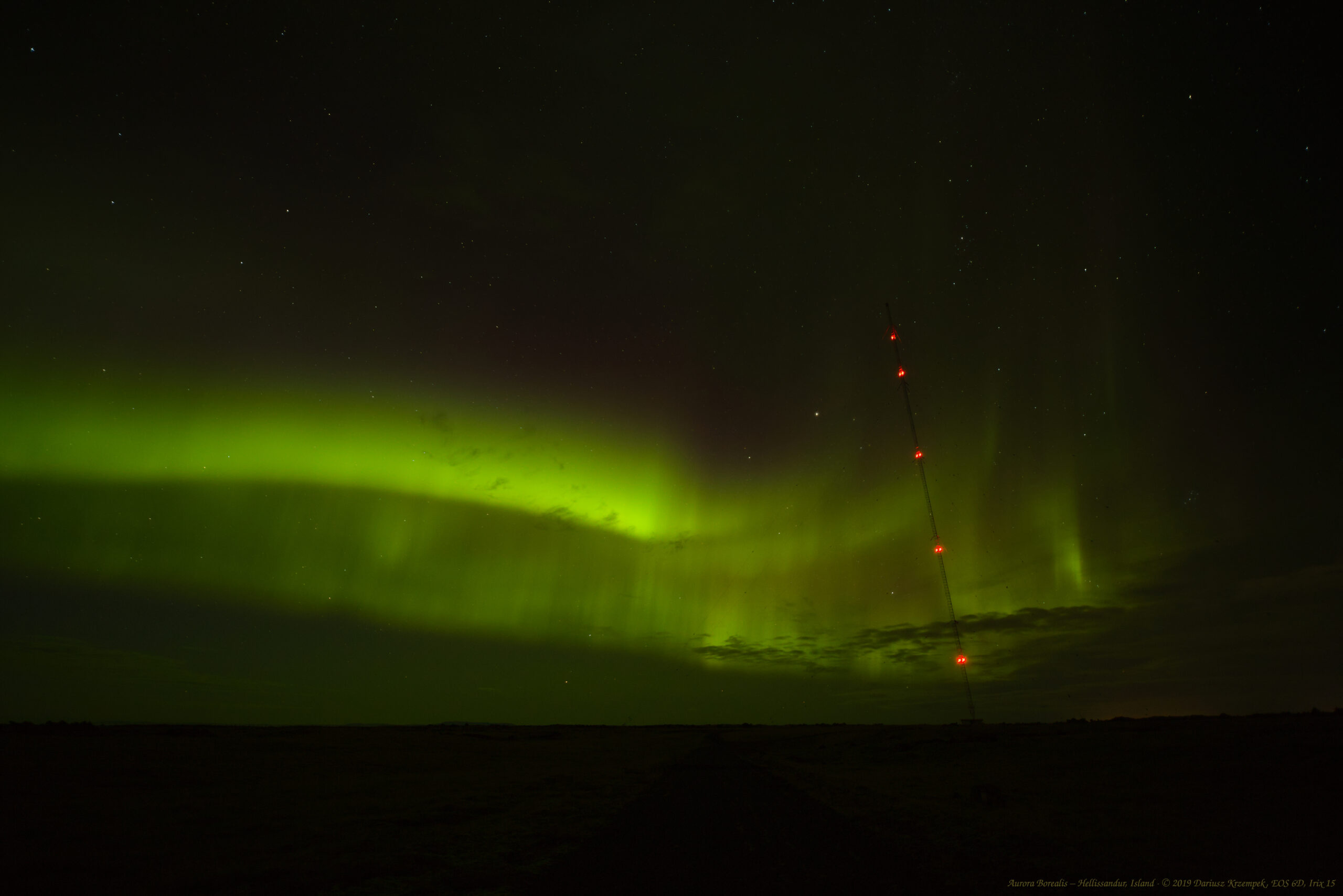
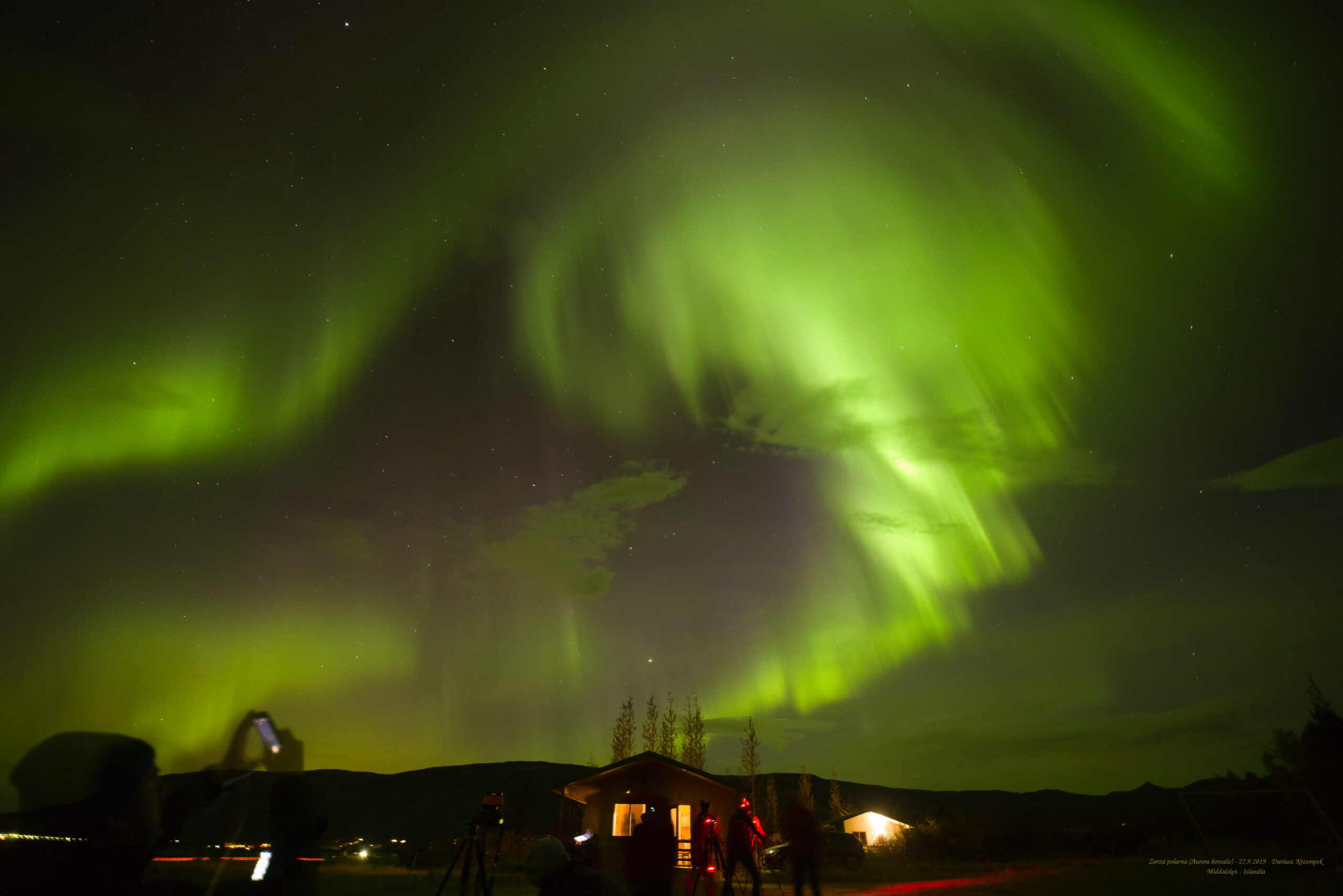
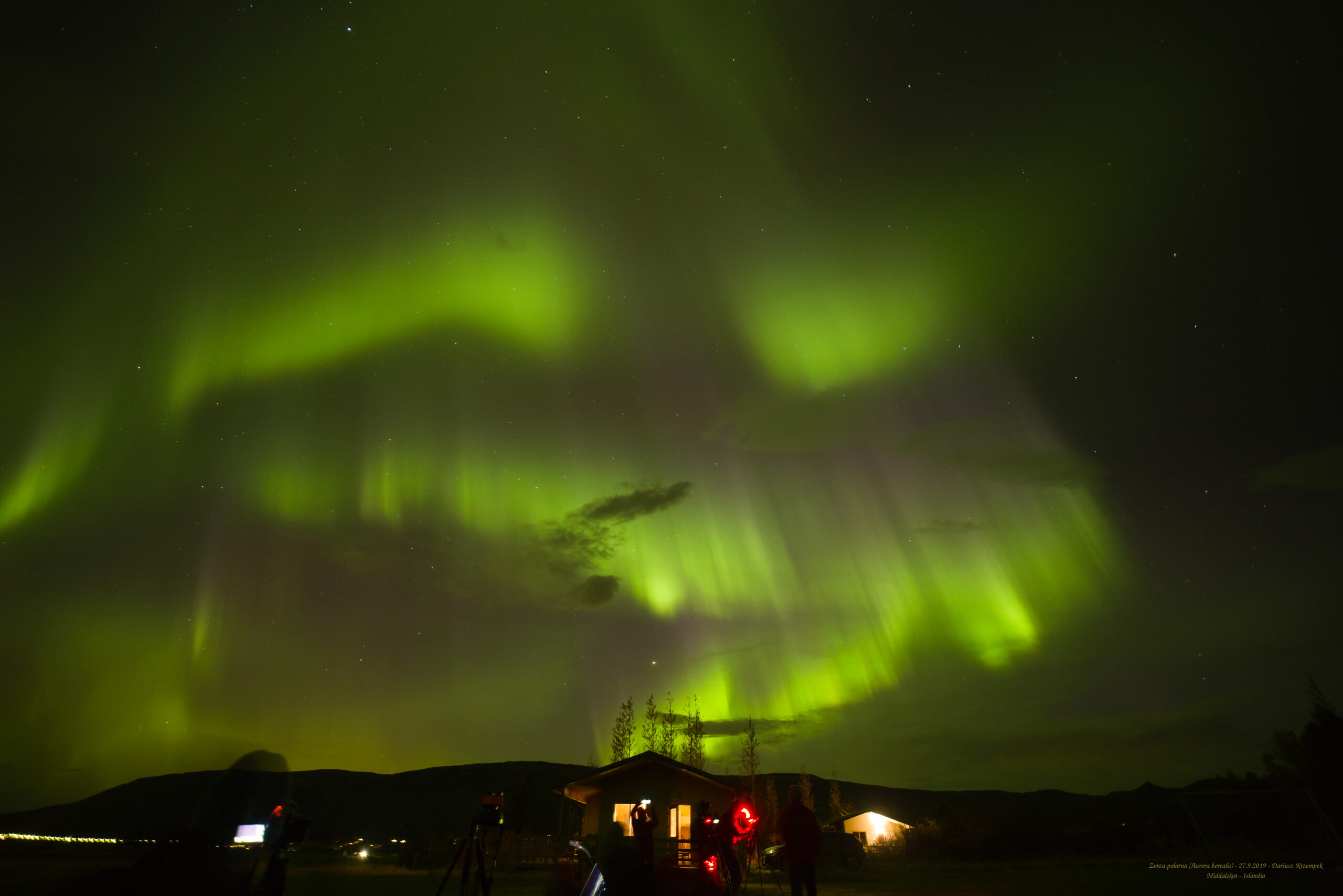
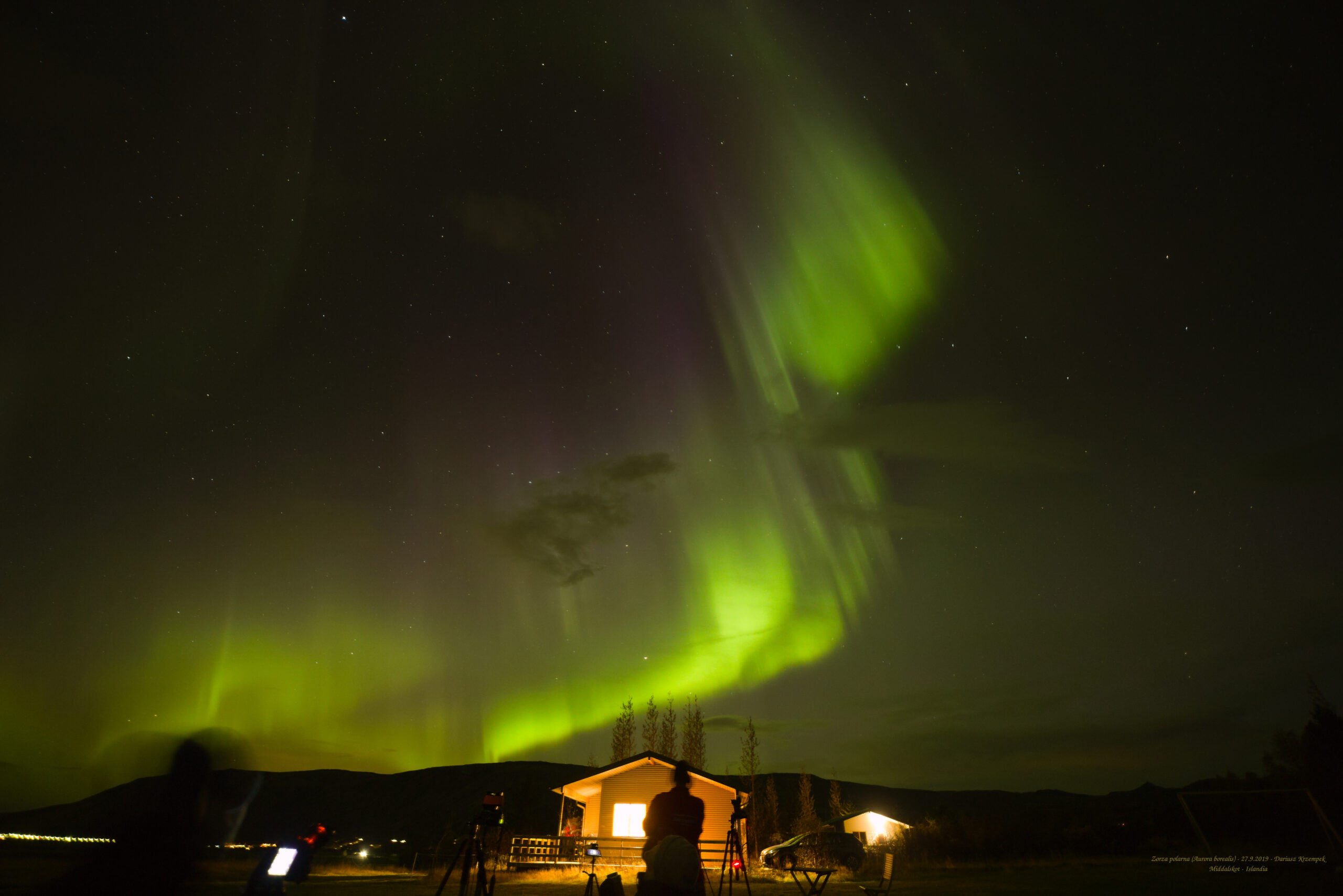
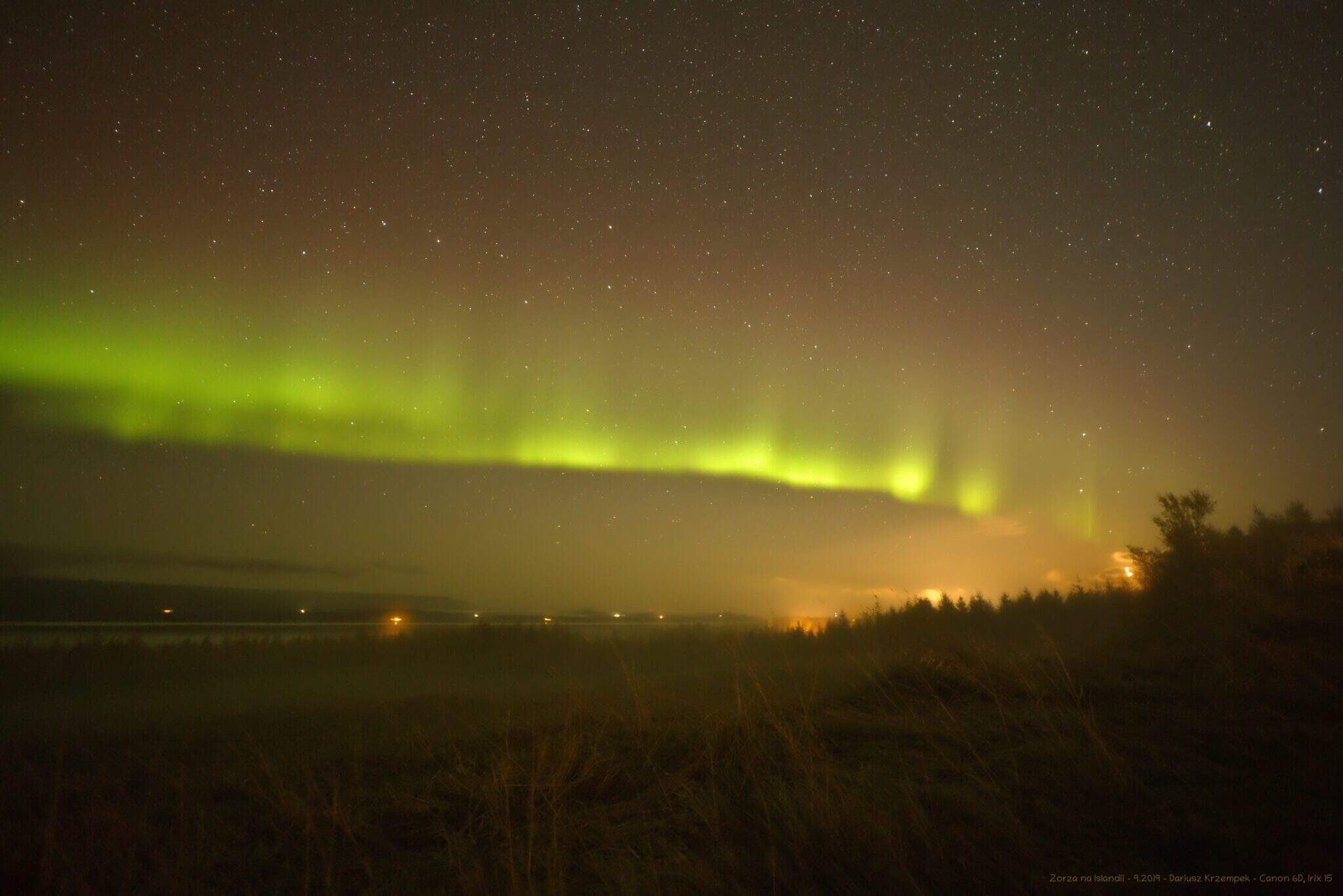
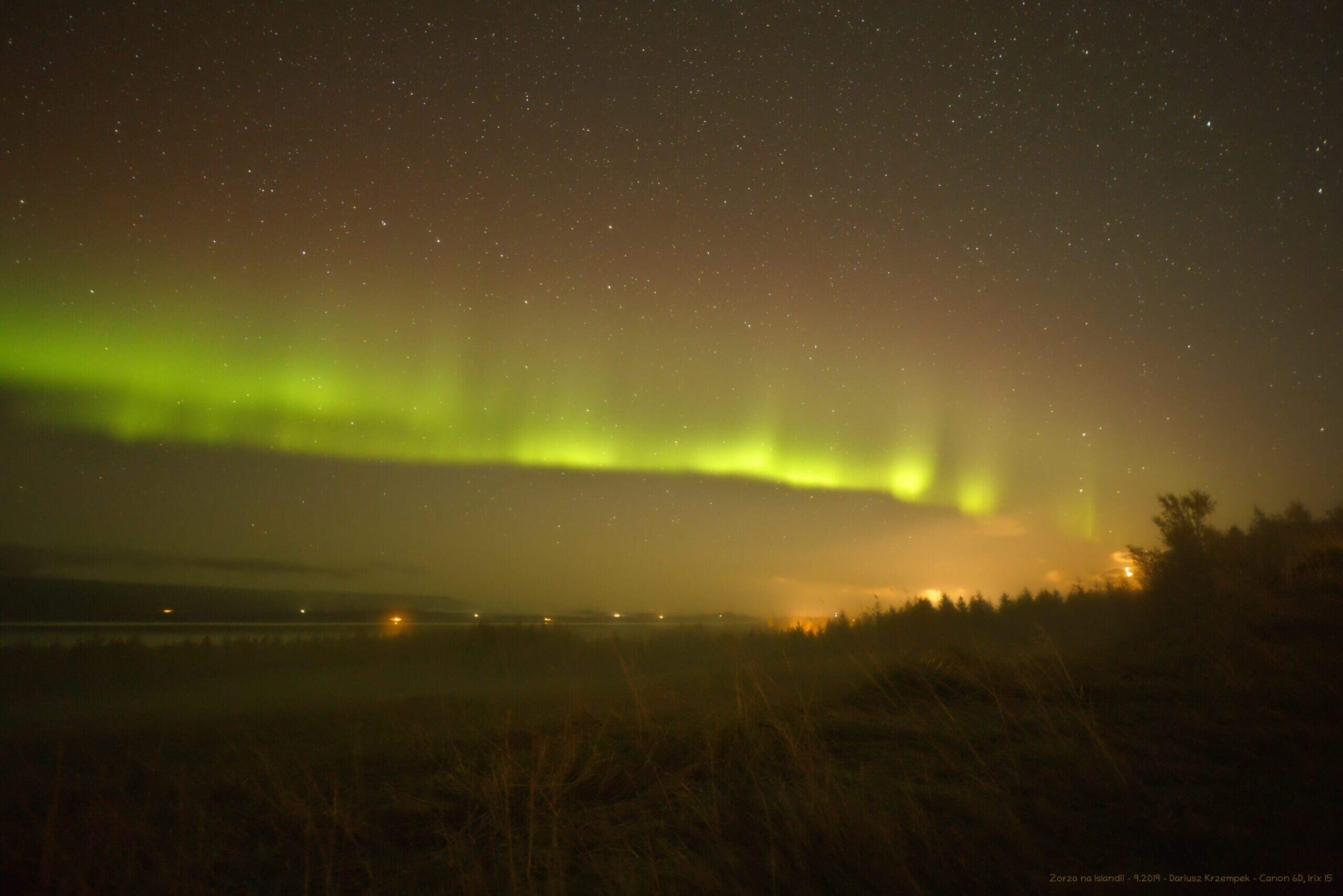
The Northern Lights are not just a visual spectacle, but primarily a visualization of Earth’s magnetic field protecting us from space. The images presented in this article were captured during expeditions to Iceland (including the Hellissandur region), which, due to its location at 64-66° North latitude, sits directly beneath the “auroral oval.”
The Mechanism: Energy Generator What we perceive as dancing lights is the result of collisions.
-
Solar Wind: The Sun ejects a stream of charged particles (protons and electrons).
-
Magnetosphere: Earth’s magnetic field intercepts these particles and funnels them toward the poles.
-
Excitation: When these particles strike the upper atmosphere, they transfer energy to atoms. As these atoms return to their ground state, they emit a photon—light.
Sky Spectroscopy
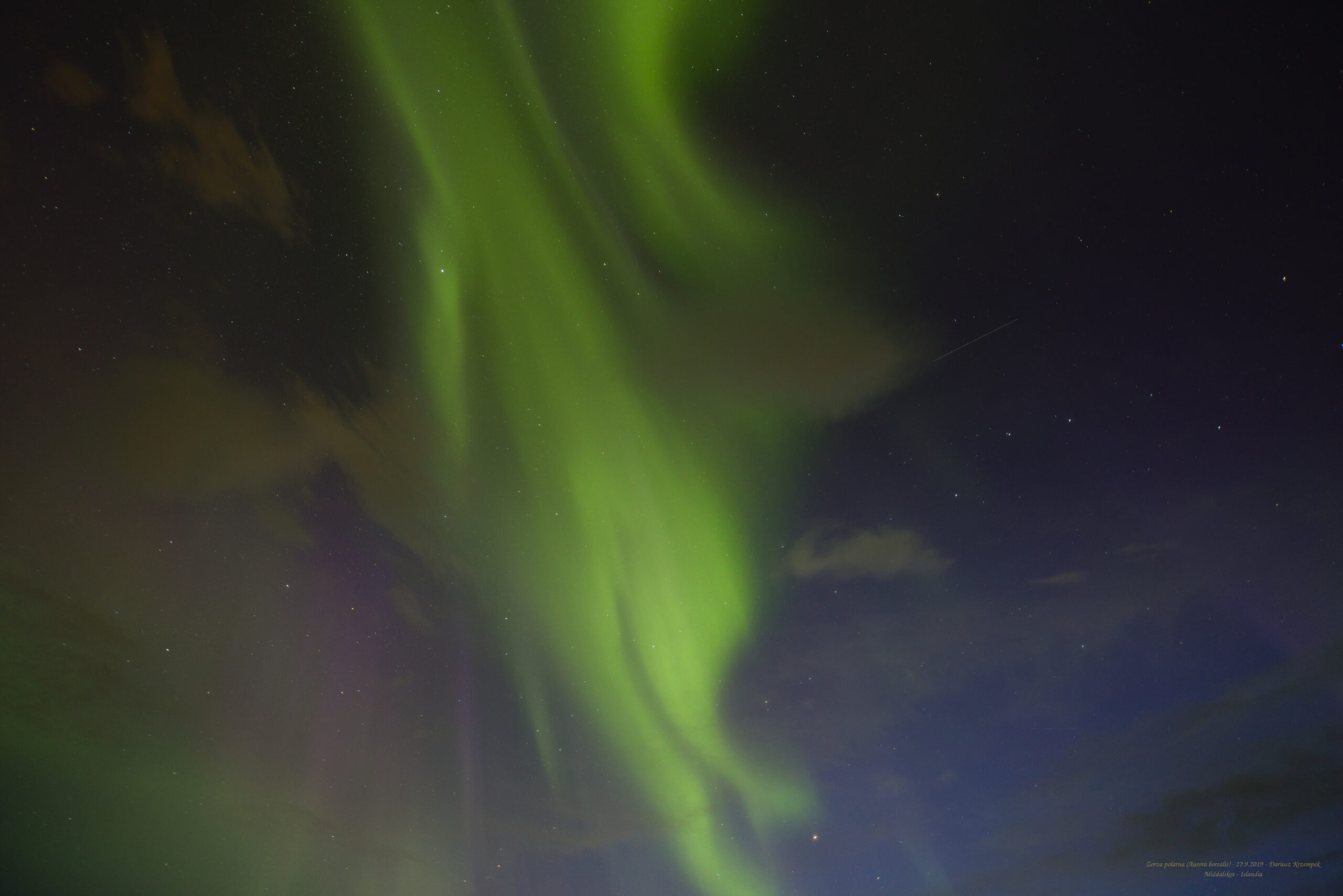
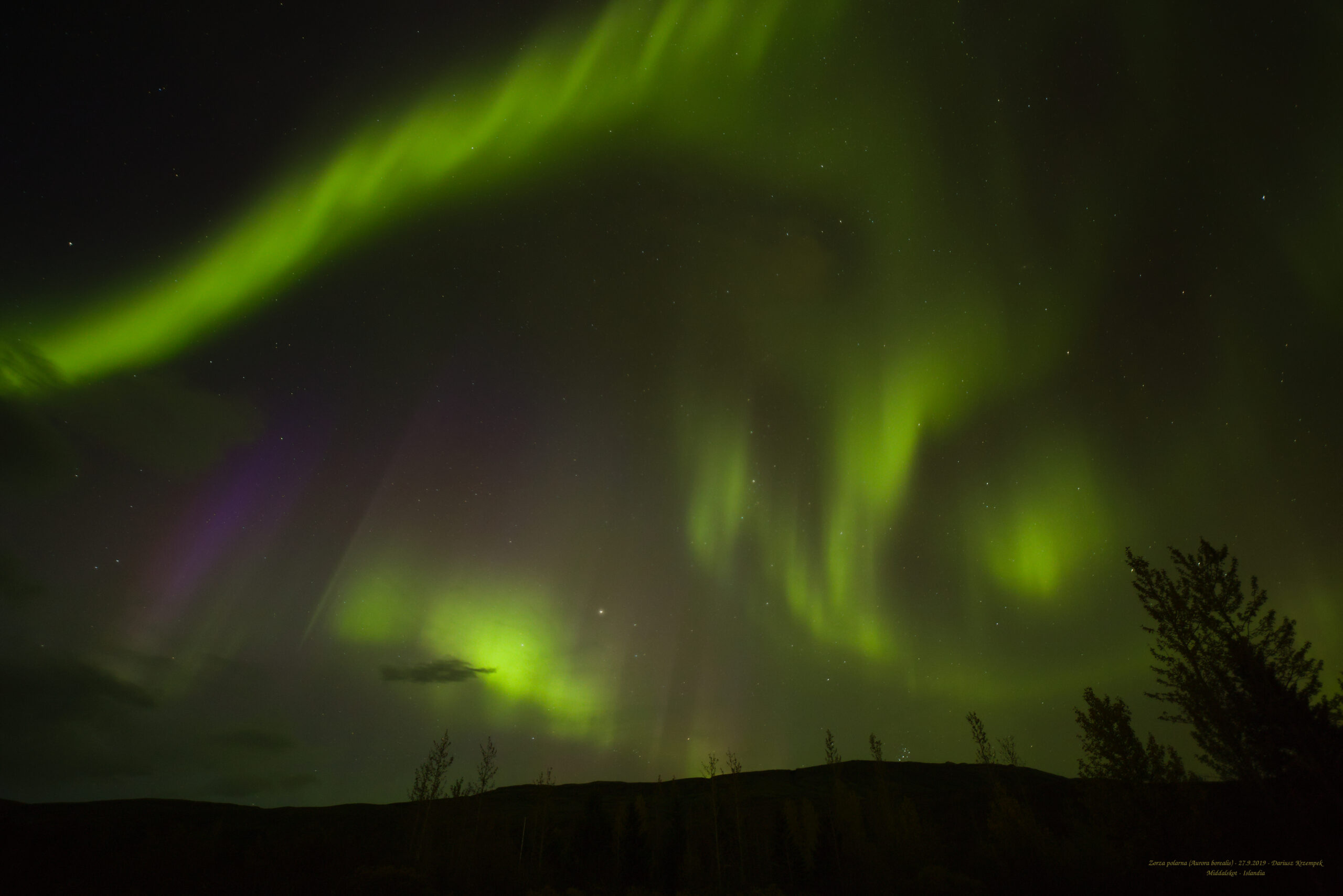
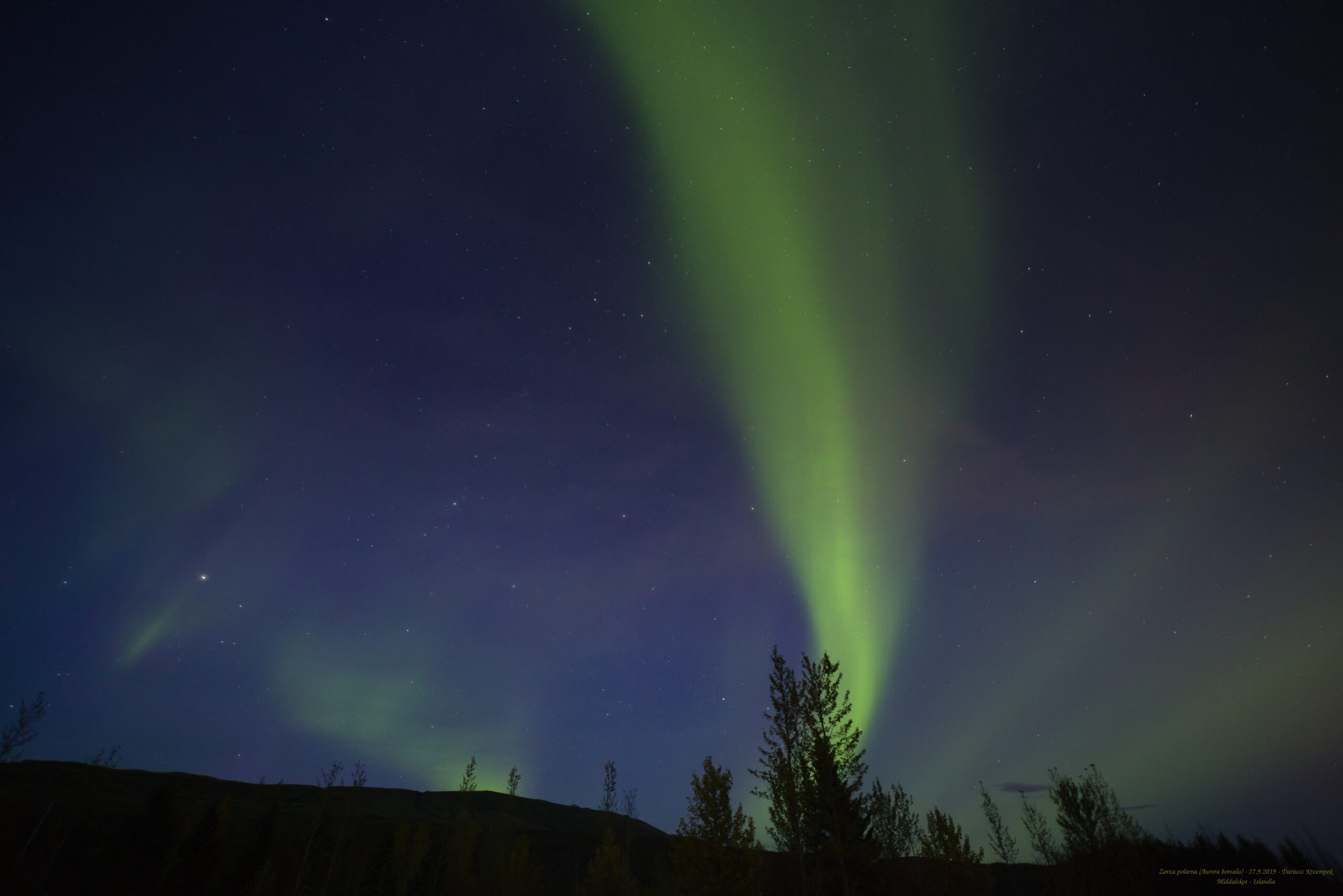
Why Different Colors? In my photographs, you can observe not only the dominant green but also purples and reds. The color depends on two factors: the type of gas and the altitude of the collision.
-
Green (): The most common sight. Produced by collisions with oxygen atoms at altitudes of approx. 100-150 km. The human eye is most sensitive to this band.
-
Red (): Rarer, visible during strong geomagnetic storms. This is also oxygen, but at very high altitudes (>200 km).
-
Purple/Blue (): Produced by the ionization of nitrogen molecules (). It is typically seen in the lower parts of the auroral “curtain,” below 100 km, where the atmosphere is denser.

Photographic Aspect
Freezing the Structure Photographing the aurora is a balancing act between exposure and motion. The aurora is dynamic.
-
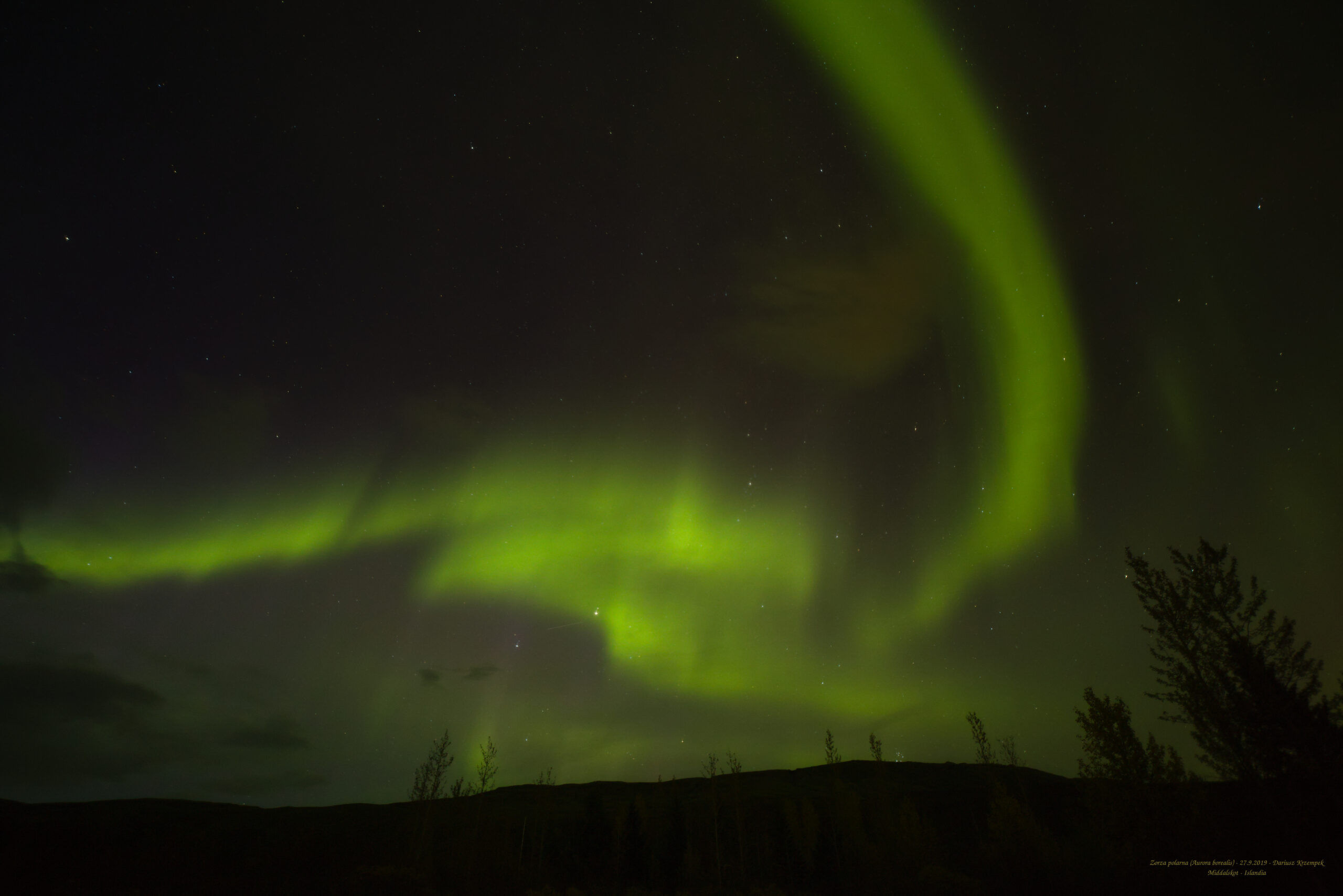
Shutter Speed: Too long (over 15-20s) will blur the structure of the “pillars,” turning them into a shapeless blob. To capture the curtain details visible in these images, I used exposure times in the range of 5-10 seconds at high ISO.
-
Bz Index: For the aurora hunter, the Bz parameter (interplanetary magnetic field orientation) is more critical than the Kp index. Only a negative (South) Bz value guarantees a spectacular show.

Miejscowość: Hellissandur
Gallery: Lights of the North
Below is a complete collection of photographs documenting the various forms and colors of the Aurora Borealis captured over the Icelandic landscape.
More about phenoma: https://en.wikipedia.org/wiki/Aurora
Photo tech.:
- ISO 1600
- Light: 10 [s] – 15 [s]
- Processing: RawTherapee and Gimp