
Altair – One of the Big Three
Altair ( Aquilae) is the 12th brightest star in the night sky and the southern vertex of the famous Summer Triangle asterism. Located just light-years from Earth, it is one of our closest neighbors among A-type main-sequence stars.
Physics: A Star Pushed to the Limit
What truly sets Altair apart is its incredible rotational speed. This star completes a full rotation on its axis in just hours (by comparison, our Sun takes about days).
-
Linear Velocity: At Altair’s equator, this reaches approximately km/s.
-
Shape: Such immense centrifugal force causes the star to be oblate (flattened at the poles). Its equatorial diameter is more than larger than its polar diameter. If it rotated only twice as fast, it would literally fly apart.
Astrophotography and Observation
With an apparent magnitude of mag, Altair is an excellent subject for testing optics.
-
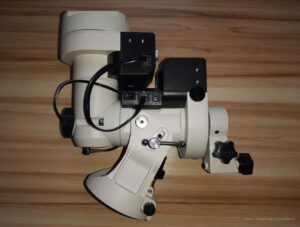
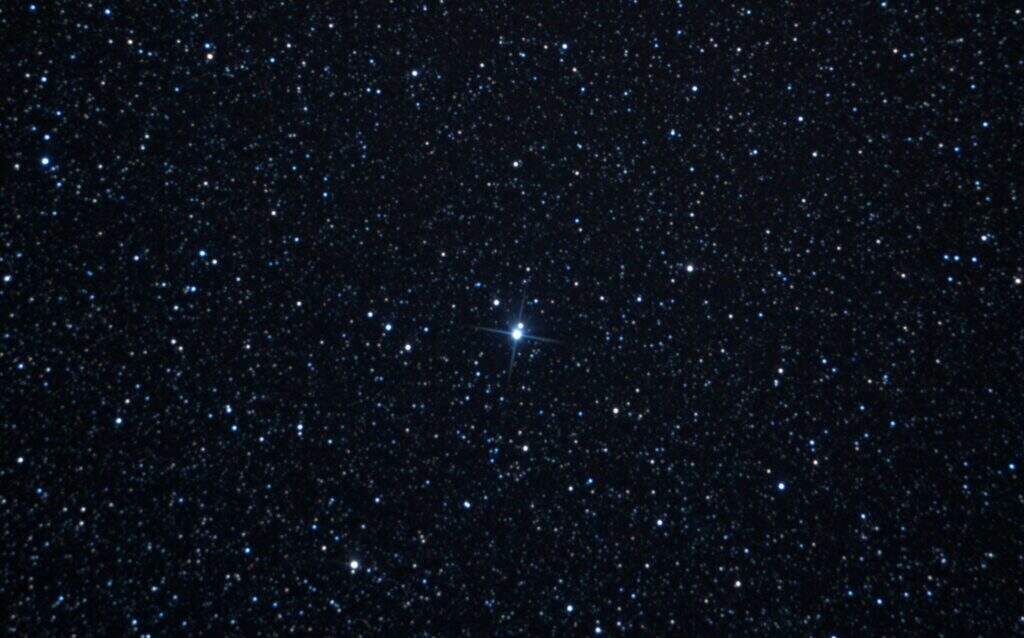
Diffraction: In images taken with Newtonian telescopes, Altair produces beautiful, sharp diffraction spikes, which serve as a great indicator of your mount’s tracking stability.
-
Color: Altair is a pure white star. If it appears purple or deep blue in your photos, it might be a sign to adjust your white balance or check for lens chromatic aberration.
Photographs taken on March 2019.
Astrophotography session parameters
For stacking process I’m using APP for 16 best frames and Dark frames and only one Flat.
Processing software: GIMP v2.10.14 + add-ons (Linux)
Lights: 16 x 38[s], ISO-1600;
 Altair – new processing – photo file size: 110 MB
Content: Original work based on source materials available on the Internet.